Schools where every child can learn with dignity.
Safe buildings, drinking water, handwashing and decent toilets — monitored school by school.
Delivery Unit is a small technocratic team inside the Agency for Strategic Reforms under the President. Its job is not to write new policy — it is to make sure the policies already agreed actually reach people.
Established in May 2023 by Order AF-28 of the Presidential Administration, as part of the Uzbekistan–2030 Strategy, to speed up social reforms that cut across several ministries.
A focused mandate on a few outcomes, measured over roughly three years — and the first government structure in Uzbekistan with its own data analysts and GIS specialists.
Ministries, utilities, international partners such as UNICEF, medical professionals, patient groups and citizens — on a whole-of-government basis.
Eleven measurable targets for 2026, tracked with field data, verified by citizens and mapped to every community.
“Success for us means when a policymaker stops saying ‘I think’ and starts saying ‘The data shows…’”
Chosen because they affect every family directly — and because no single ministry can fix them alone.
Safe buildings, drinking water, handwashing and decent toilets — monitored school by school.
Prevention, screening and a national cancer registry that turns patient data into better care.
Expanding supply, longer service hours, open water-quality data and better wastewater treatment.
The principle is short — “no data, no policy.” Select a stage to see how it has worked in practice.
Published figures from different studies and dates — not live totals. Select any card for context and source.
“Once every community is mapped and visible, silent inequalities can no longer be ignored.”
Status and results appear only where they have been published.
Aziza Umarova leads the Delivery Unit, working on outcomes-based governance and public-sector innovation. She leads development of a unified performance system for the Uzbekistan–2030 Strategy and champions the “Zero Bureaucracy” initiative.
Before that she spent nearly a decade with UNDP, including the Global Centre for Public Service Excellence in Singapore. She was a Visiting Fellow at Harvard's Davis Center (2022), is a Chevening Scholar with a Master's from the University of St Andrews, and is a contributing author to two Palgrave volumes on public administration.
“People don't want ‘innovation.’ They want problems solved.”
Governments rarely fail for lack of effort — they fail because effort scatters. Lisandro Martin of the World Bank and Aziza Umarova describe how Uzbekistan's Delivery Unit aligns government action around measurable outcomes.
GovInsider's Women in GovTech 2025 series speaks with Aziza Umarova, Head of Delivery Unit, about building a government that runs on evidence — where the rule is “no data, no policy.”
Women over 30 face a higher risk of developing cervical cancer. The article looks at screening and early detection — and at the state's responsibility to give every patient a chance at life.
A draft law “On the National Data Management System” would create one legal framework for government data — with open data portals, machine-readable formats and regulated access that businesses can use for planning and investment.
ISCAD and the Delivery Unit have surveyed more than 13,000 households on diet, nutrition knowledge and health. WHO STEPS data cited in the study show 67.2% of people do not eat the recommended amount of fruit and vegetables.
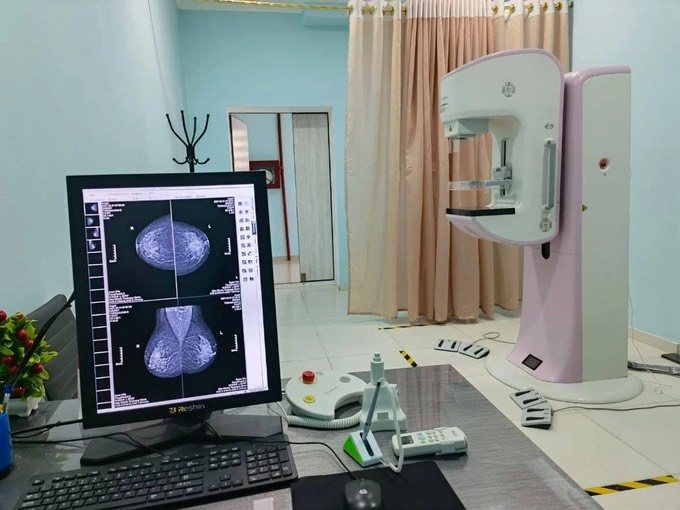
From 2025, a breast and cervical cancer control programme starts in Uzbekistan: women aged 30–65 can be screened free every two years, with diagnosis and treatment of confirmed cases covered by the state.
For a day, LED screens across Tashkent displayed the phrase “Onasini emsin” — a campaign for World Breastfeeding Week to give a phrase used as an insult back its original meaning: a recommendation to breastfeed.
Building better public services requires collaboration, reliable evidence, and a shared commitment to results.